ENC28J60 with lwIP: DHCP Client
Hardware and Software Requirements
To complete the project successfully, you need the below items:
- Any microcontroller that has Serial Peripheral Interface (SPI)
- Any ENC28J60-based breakout board
- RJ45 for Ethernet connection for local communication
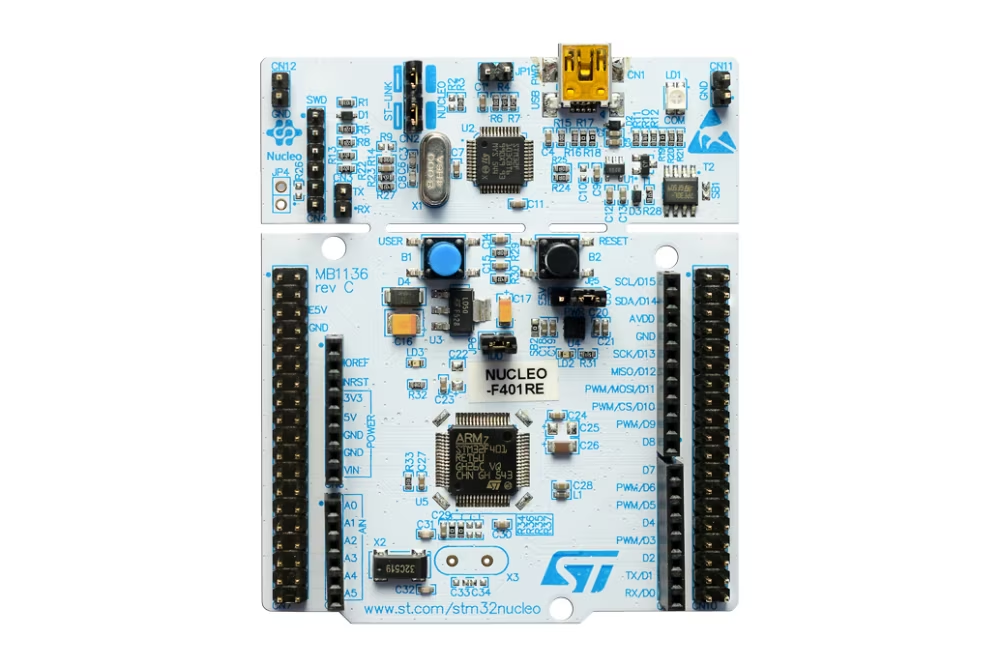
The STM32F401RE Nucleo Board shown in figure below was used for this demonstration.
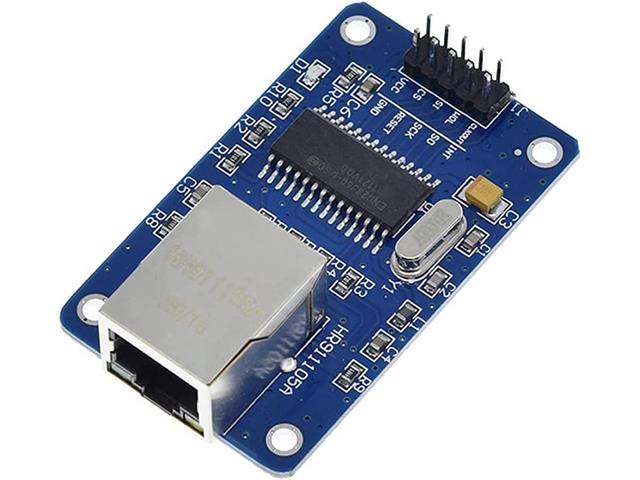
The ENC28J60 board was used for Ethernet connection.
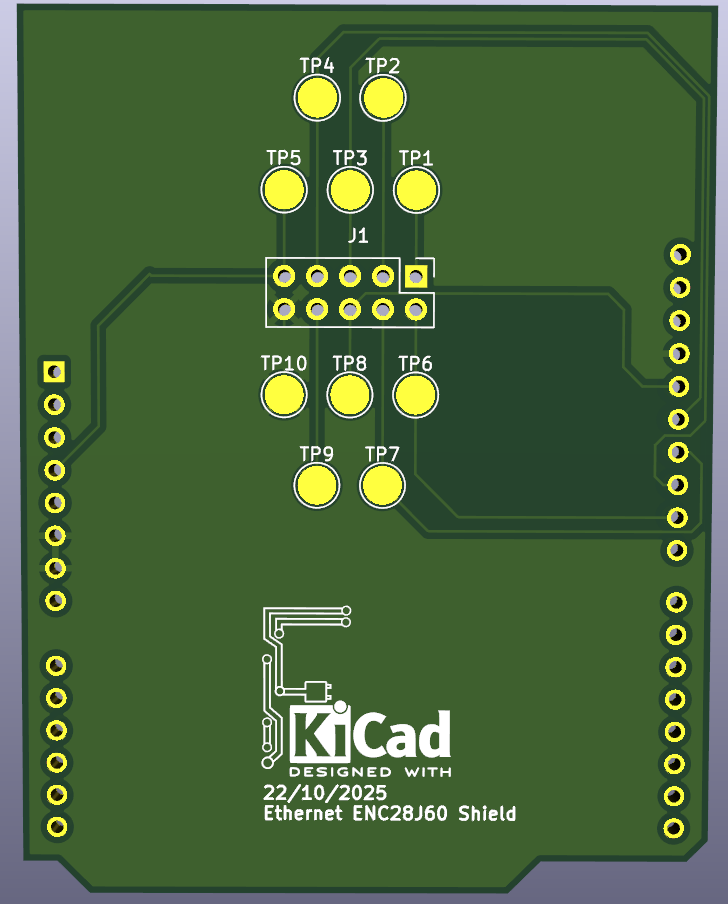
I also used KiCad to design an own interface module to avoid using a breadboard or having wires all over the place. The KiCad files can be shared upon request.
Hardware Setup
| Signal | Connection |
|---|---|
| 3.3V | NUCLEO 3V3 → ENC28J60 VCC |
| GND | NUCLEO GND → ENC28J60 GND |
| MOSI | PA7 (SPI1 MOSI) → SI |
| MISO | PA6 (SPI1 MISO) → SO |
| SCK | PA5 (SPI1 SCK) → SCK |
| CS | PB6 (GPIO Output) → CS |
| INT | PC7 (EXTI7) → INT |
ENC28J60 Driver Development
void enc28j60_initDr(enc28j60Drv * dev, spiChipSel cs, spiChipDSl dCS, slaveRead rd, slaveWrite wr, intHandler hdle, delayMs delay);
void enc28j60_strtDr(enc28j60Drv * dev);
void enc28j60_sftRst(enc28j60Drv * dev);
bool enc28j60_intPnd(enc28j60Drv * dev);
void enc28j60_intSet(enc28j60Drv * dev);
void enc28j60_intCls(enc28j60Drv * dev);
bool enc28j60_etherReceive(enc28j60Drv * dev, uint8_t * data, uint16_t length);
bool enc28j60_etherTransmit(enc28j60Drv * dev, uint8_t * data, uint16_t length);
lwIP Integration
err_t enc28j60_translate(struct netif *netif, struct pbuf *p) {
	if(bTxBusy != true) {
		dMesgPrint(DEBUG_INFO, "TX started!\r\n");
		struct pbuf *q;
	    uint16_t total_len = p->tot_len;
	    uint16_t offset = 0;

	    /* Copy the full chained pbuf into linear ENC buffer */
	    for (q = p; q != NULL; q = q->next)
	    {
	        memcpy(&dev.txPkt.data[offset], q->payload, q->len);
	        offset += q->len;
	    }

	    /* Safety: offset must equal total length */
	    if (offset != total_len) {
	        return ERR_BUF;
	    }

	    (void) enc28j60_etherTransmit(&dev, dev.txPkt.data, total_len);

	    bTxBusy = true;
	    return ERR_OK;
	}else {
		dMesgPrint(DEBUG_ERROR, "TX busy!\r\n");
		return ERR_INPROGRESS;
	}
}

void ethernet_do_translation_to_pbub(enc28j60Drv * dev, struct pbuf *p) {
	uint16_t len = dev->rxPkt.rxPktLen.u16PktLen;
    if (len > p->tot_len) len = p->tot_len;
	pbuf_take(p, dev->rxPkt.data, len);
}
DHCP Client Specific Code
enc28j60_initDr(&dev, spi1ChipSelect, spi1ChipDeSelect,
                spi1Read, spi1Write, NULL, delayMsFunction);
enc28j60_strtDr(&dev);

lwip_init();
netif_add_noaddr(&my_netif, NULL, ethernet_init, ethernet_input);
netif_set_default(&my_netif);
netif_set_up(&my_netif);

dhcp_set_struct(&my_netif, &myDhcpClient);
dhcp_start(&my_netif);

while(true)
{
    if(u32FinerTimer >= 1)
    {
        u32FinerTimer -= 1;
        dhcp_fine_tmr();
        HAL_GPIO_TogglePin(GreenLED1_GPIO_Port, GreenLED1_Pin);
    }

    if(u32CoarseTimer >= 120)
    {
        u32CoarseTimer -= 120;
        dhcp_coarse_tmr();
    }
}
Ping Terminal Outputs
EIR REG --> 64
6) Receive Packet Pending Interrupt Flag bit
Next Point address --> 5030
ETH --> Length out of range
ETH --> RX OK
PKT number 147413
PKT length 98
ip_input: iphdr->dest 0xca08a8c0 netif->ip_addr 0xca08a8c0 (0x8a8c0, 0x8a8c0, 0xca000000)
ip4_input: packet accepted on interface en
ip4_input:
IP header:
+-------------------------------+
| 4 | 5 |  0x00 |        84     | (v, hl, tos, len)
+-------------------------------+
|     1324      |010|       0   | (id, flags, offset)
+-------------------------------+
|   64  |    1  |    0xa28b     | (ttl, proto, chksum)
+-------------------------------+
|  192  |  168  |    8  |  215  | (src)
+-------------------------------+
|  192  |  168  |    8  |  202  | (dest)
+-------------------------------+
ip4_input: p->len 84 p->tot_len 84
ip4_output_if: en0
IP header:
+-------------------------------+
| 4 | 5 |  0x00 |        84     | (v, hl, tos, len)
+-------------------------------+
|     1324      |010|       0   | (id, flags, offset)
+-------------------------------+
|  255  |    1  |    0xe38a     | (ttl, proto, chksum)
+-------------------------------+
|  192  |  168  |    8  |  202  | (src)
+-------------------------------+
|  192  |  168  |    8  |  215  | (dest)
+-------------------------------+
ip4_output_if: call netif->output()
Source Code
The source code for the project can be found here — checkout the dhcpClient tag.